
Fetal monitoring strips provide clinicians with a visual record of fetal heart rate (FHR) and uterine activity captured by fetal monitoring equipment during labor and delivery. In labor and delivery (L&D) units, these tracings can help identify changes in fetal well-being, support early clinical intervention, and document overall trends.
What Are Fetal Monitoring Strips and When Are They Used?

Fetal monitoring strips are continuous paper recordings generated by fetal monitors or cardiotocography (CTG) monitors. The strips display information on fetal heart rate, uterine contractions, time intervals, and clinical event markers. Clinicians evaluate fetal heart rate patterns over time to assess fetal well-being and identify changes that may warrant further evaluation or intervention. These monitoring strips become a part of the patient’s medical record and can be referenced during postpartum appointments and provider education/trainings.
FHR Monitoring Cases:
- Prenatal visits: Ensure fetal heartrate is in healthy range.
- Labor & Delivery: Monitoring shows how FHR changes in response to contractions, with nearly 90% of women having external fetal monitoring during labor.
- High-risk pregnancy: Fetal monitoring may be used more frequently when maternal or fetal risk factors warrant additional surveillance.
Understanding the Components of a Fetal Monitoring Strip
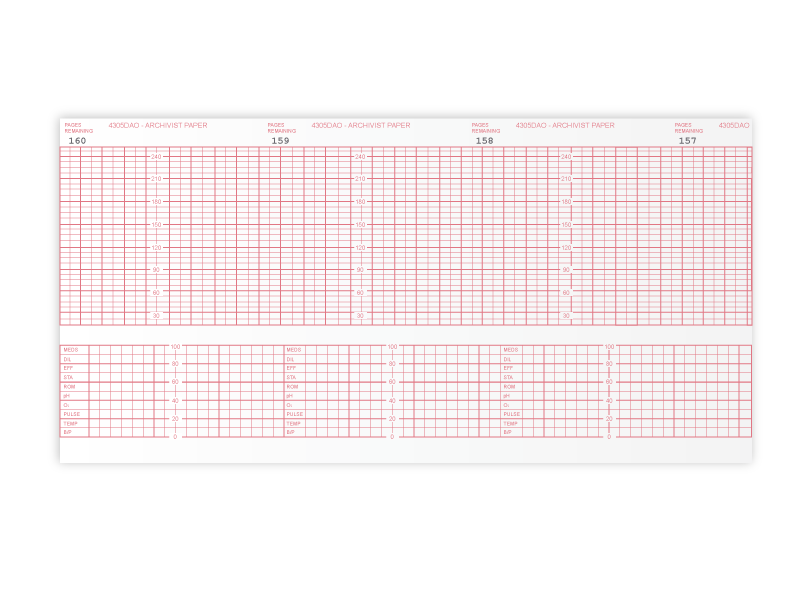
Every strip has key elements that clinicians can evaluate according to the National Institute of Child Health & Development.
Fetal Heart Rate
A normal baseline for FHR is 110-160 beats per minute. Clinicians can evaluate baseline rate, variability, accelerations & decelerations from the trace readings.
Uterine Activity
The lower portion of the strip shows uterine contractions and more specifically displays:
- Frequency
- Duration
- Resting tone (when applicable)
- Overall contraction pattern
Time Scale
Printed time markers allow providers to correlate clinical interventions, medication interventions, and other patient events with fetal response.
Event Markers
Depending on the basis of the monitoring strips, they can also be used to document maternal push events or fetal movement markers.
Why Fetal Monitoring Matters
Continuous fetal monitoring can help clinicians catch warning signs of poor fetal health early.

Healthcare providers routinely check:
- Baseline fetal heart rate
- Baseline variability
- Accelerations/Decelerations in heart rate
- Frequency & intensity of uterine contractions
- Intensity and resting tone of uterine contractions
- Overall category (I, II, or III) of fetal heart rate patterns
Early intervention of abnormal tracings helps providers treat quickly when necessary, improving potential outcomes of maternal and neonatal health.
Clinical Environments & Users:
Fetal monitoring may be used more frequently when maternal or fetal risk factors warrant additional surveillance.
These settings can include:
- Labor and Delivery Units
- High-risk Pregnancy Clinics
- Maternal-Fetal Medicine / Antepartum Units
- Birthing Centers
- Emergency Departments
Primary Users:
- L&D Registered Nurses
- Obstetricians/OB-GYNs
- Certified nurse-midwives
- Maternal-fetal medicine specialists
- Residents and other trained clinical staff